| >> Versão Portuguesa |
|
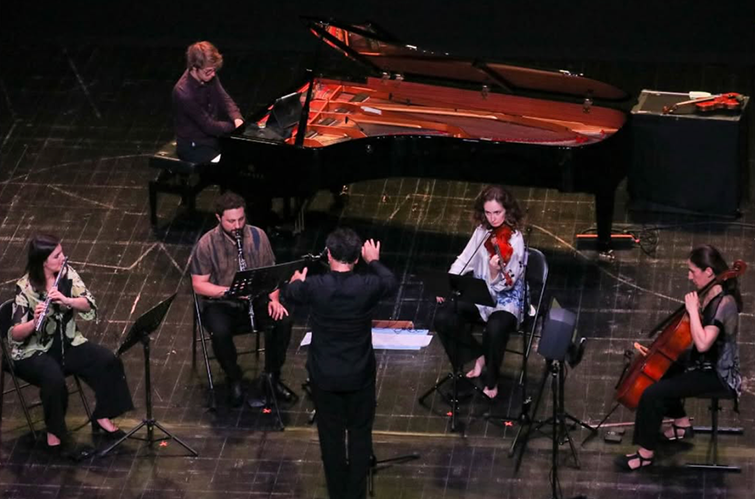
| 2026.02.05 DME Ensemble concert in the framework of the Pensar a Música Hoje international meeting; works by Mariana Vieira, Jaime Reis, Carlos Caires and Hèctor Parra; Pedro Carneiro (conductor), Alex Waite (piano), Ângela Carneiro (cello), Beatriz Costa (violin), Carlos Silva (clarinet), Mafalda Carvalho (flute), Suse Ribeiro (sound projection); Saturday, January 31st, 9h00 p.m., Goehte-Institut, Lisbon. |
|
| Energy, tension, density (and a beautiful climax!) PEDRO BOLÉO |
|
|
The international meeting Pensar a Música Hoje (Thinking Music Today), the result of a collaboration between the Arte no Tempo association and the Projecto DME, took place from January 30th to February 2nd. Programmers from various countries, festivals and European institutions gathered to discuss contemporary music programming. It all began on January 30th with an informal meeting at Lisboa Incomum. The following day, January 31st, the Goethe-Institut hosted a discussion to share different points of view and practices in programming. The Pensar a Música Hoje meeting continued in Porto over the following days, featuring a concert by the ars ad hoc ensemble at the Serralves Auditorium and concluding with a final reflection at the Serralves Foundation. On Saturday evening, January 31st, we were able to attend a concert by the DME Ensemble at the Goethe-Institut Portugal, in Lisbon, which we would like to echo here. Jaime Reis from Projecto DME presented the concert featuring works by Portuguese composers, as well as a piece by the Spanish composer Hèctor Parra. He identified a common thread running through these very different pieces: music full of “energy, tension and density”. Right from the start of Mariana Vieira’s piece for quintet (cello, violin, clarinet, flute and piano) and electronics, Retracement, energy, tension and density were clearly audible. This stimulating piece sees the quintet’s attacks interrupted by brief moments in which the timbral complexity, often created by rapid gestures, is allowed to resonate. An electronic element constantly interferes with the sonic explorations of this piece, which was written in 2021 by the youngest composer on the concert’s programme. We felt that there was not enough time for the piece to resonate more fully and for it to develop. In music, time depends on what is proposed; it is always relative and not only about duration (nine minutes in this case). To our ears, the piece’s timbral complexity and good gestural ideas had plenty of room for maneuver; they opened up the possibility of development over longer periods of time or greater resonant suspensions. Could Retracement be ‘extended’ from within, or could it be the first (condensed energy) movement of a larger piece? Mariana Vieira’s piece was conducted by maestro Pedro Carneiro and performed by Alex Waite (piano), Ângela Carneiro (cello), Beatriz Costa (violin), Carlos Silva (clarinet), Mafalda Carvalho (flute), with Suse Ribeiro on sound projection. 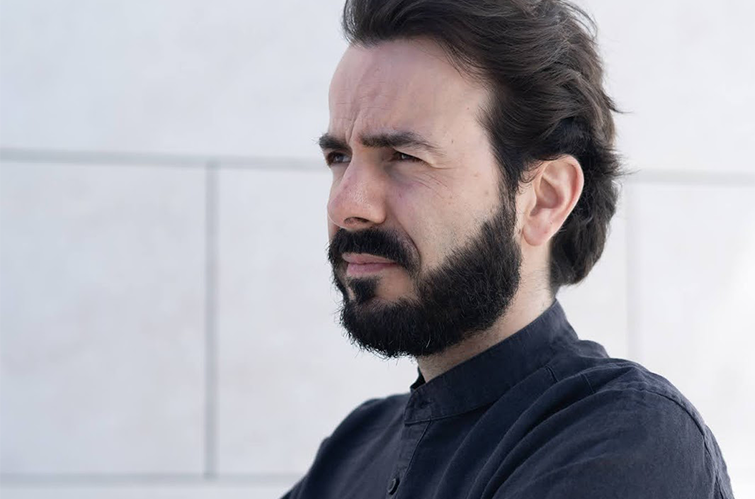 Jaime Reis · © Sofia Nunes Next came, without the need for a conductor, Sangue Inverso (II) and Inverso Sangue (II): Granito (A), followed by Sangue Inverso (III) and Inverso Sangue (III): Obsidiana (A) — this one with Trevor McTait on viola — ‘twin’ pieces (the first two for quintet and the others for sextet), by Jaime Reis. These compositions are part of a larger cycle, all bearing the Sangue Inverso/Inverso Sangue title with minerals, and each piece has enough autonomy to stand alone. The complexity here is even more pronounced than in Mariana Vieira’s work, although some structural features help to ‘organise’ the listening experience. Often, the strings play with each other, as do the wind instruments, while the piano plays with both. These are challenging pieces, difficult to perform, and bold in their exploration of timbre, with lively dynamics. The DME Ensemble performed them with (good) energy, successfully navigating the potential confusion arising from the numerous musical events in a short timeframe. 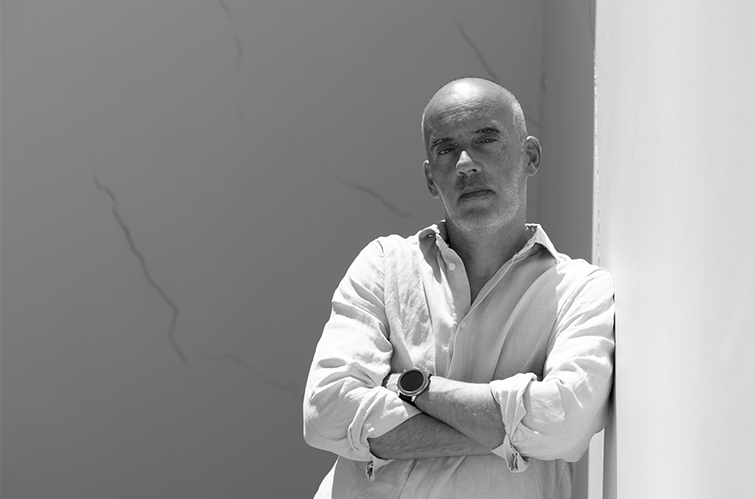 Carlos Caires · © Jorge Carmona This was followed by Carlos Caires’ Propagation, a piece for violin, viola, flute, clarinet, piano and electronics, written during the COVID-19. Its title alludes to the pandemic, and some of its formal construction processes relate to the rhythms of the virus’s propagation (transposed into musical configurations). Here, the music is much clearer and calmer in gestures than in the previous pieces, with a captivating sound that suggests (imagined) movement, beyond the actual movement of the music. Propagation contains passages in which we are left with only the electronics, and others combining rhythmic and timbral stimuli in an admirable way, with surprises that, even in a short time (the piece is no more than nine minutes long), are capable of moving us. Finally, the longest piece of the concert, lasting 19 minutes, seemed to fly by in a blink of an eye, so fascinating is it in its ability to build the timbre in a joint effort by the ensemble, which was exquisite in its understanding of the music of Hèctor Parra. Stress Tensor, as this 2009 piece is called, is a work in which each instrumentalist in the sextet (flute, clarinet, piano, violin, viola and cello) seems to know exactly how to contribute to the emerging timbral community. In this sense, we could say that it is a piece that combats alienation (of the musician as a being in society). It is the ensemble movement that is particularly lively and interesting, even if, for example, the strings have their ‘own ways’. The sudden interruptions, constant throughout the piece, give it an unusual strength. At a certain point, something like a song emerges, lyrical and dissonant, but this too is interrupted. The maximum complexity and density (a large number of events in a short time) appear legible between harmonies that unravel in rapid gestures, in noises or, at another moment, as if a swarm of bees were visiting Messiaen’s music. It is a beautiful piece by Hèctor Parra, which clearly shows how relative time is — 19 minutes that passed in an instant. But what a beautiful instant! |
|