| >> Versão Portuguesa | |
| 2026.10.01 Miso String Quartet; Pedro Lopes (violin), César Nogueira (violin) Joana Cipriano (viola), Luís André Ferreira (cello); Obras de Miguel Azguime, Constança Capdeville and Steve Reich; September 22nd, O’culto da Ajuda, Lisbon. |
|
| The Old New For the First Time — a Discovery from Constança Capdeville PEDRO BOLÉO |
|
|
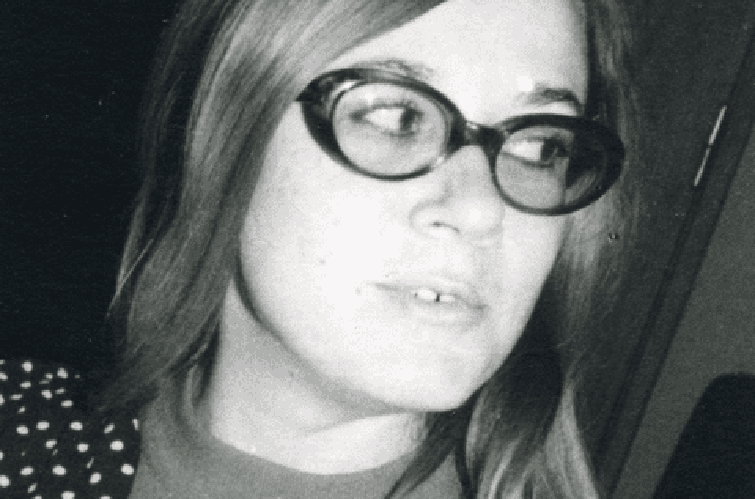
New music always requires our curiosity. On this occasion, my curiosity was entirely focused on a piece by Constança Capdeville, rediscovered by António de Sousa Dias, a composer and researcher who was also a student and artistic collaborator of this remarkable composer from the 20th century in Portugal. Concertino is a piece from 1965; whilst the title might seem surprising for appearing ‘old-fashioned’, it is in fact an innovative work, very much of its time. Perhaps this title is linked to a dedication by Constança Capdeville (born in Barcelona in 1937, but who had lived in Portugal since the 1950s) to a history of Portuguese music, which she studied in depth and knew well, whilst remaining interested in Catalan culture and making creative use of it. The piece also includes, in the second movement, a kind of set of variations based on the Canção do Figueiral, an old Portuguese song that had previously been revived by Viana da Mota and Fernando Lopes-Graça. 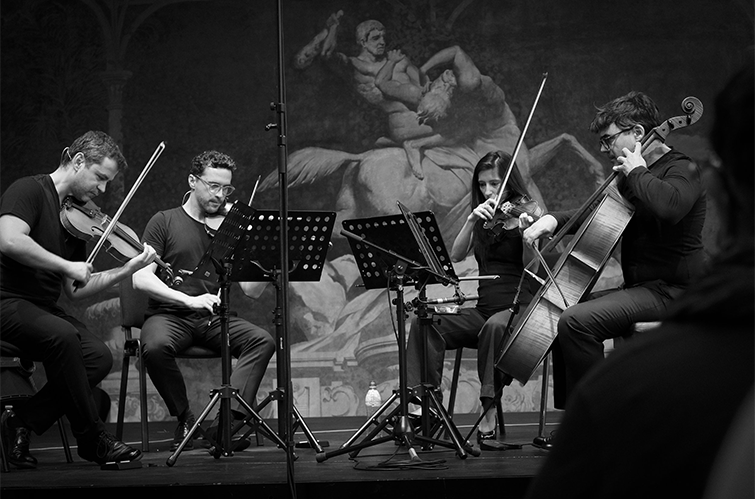 Miso String Quartet · © Susana Paiva A string quartet that nobody had heard of (apart from researchers and ‘bookworms’) — and which may well have been written for a composition competition (though, as far as we know, it was never actually performed) — and which was performed admirably, with energy and clarity (although we have nothing to compare it with, of course), by this string quartet comprising four exceptional musicians: Pedro Lopes (violin), César Nogueira (violin), Joana Cipriano (viola) and Luís André Ferreira (cello). A quartet is not simply the sum of four musicians — it is their technical and expressive interplay; it is the multiplication of sonic layers that it enables; and it is also a very rich history, from Haydn to Shostakovich (and so on right up to the present day), which any composer who dares to tackle it must, at least in part, be familiar with. It is clear that Constança knew exactly what she was doing. New music, yes, but over 60 years old, and only now available to listen to thanks to the transcription and research work of António de Sousa Dias. Music of its time, already incorporating the innovations proposed by serialism, but in the free and ever-captivating language of Constança. Concertino appears to have preceded Music for 15 Performers, also from 1965, for instrumental ensemble, judging by the instrumentations noted in pencil on the score (as suggested by António de Sousa Dias). And the work also points to the composer’s subsequent arduous labour (the tour de force of Diferenças sobre um intervalo, for orchestra, dates from 1969). It was thrilling to hear, in the hands of these performers, this ‘old yet new’ piece for the first time: the musical voice of Constança Capdeville, which captivates us with its inventiveness but also with its modern articulations: music that is never closed off and ‘opens one’s ears’, without any softness or outdated elements, from the opening Allegro inquieto to the return of restlessness at the end, but also featuring passages through tranquil zones in the modern variations on the Canção do Figueiral. ‘Whims have a date’, wrote Mário Dionísio in A Paleta e o Mundo, a major essay on art and society published in the late 1950s and early 1960s, shortly before Constança’s piece. He was talking about painting, but it applies equally to music: the singularity and originality of creators (their ‘whims’) are nonetheless a link to their time (and are dated), even if they are ‘against it’, challenging it, proposing through art an alternative vision, a different world. Constança in 1965. Us listening to her, in 2026. 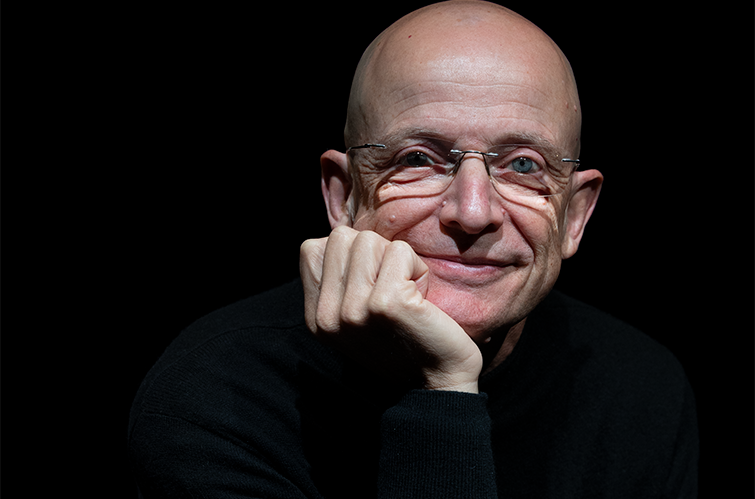 Miguel Azguime · © Jorge Carmona Mário Dionísio also comes to mind in connection with the first piece performed this evening at O’culto da Ajuda, which takes its title from a book of poems that the essayist and poet wrote directly in French: Le Feu Qui Dort. The first poem from that book was projected into the room at the start of Miguel Azguime’s piece, with its surprising opening, verging on the surreal (‘A rain of bulls fell upon the city’), and its ending which points to a fire that lies dormant and has been awakened (‘le feu qui dort est éveillé’), despite everything that has withered (memories, desires, remorse). This fire can be seen, amongst other things, as the power of creation, a smouldering fire that can suddenly burst into flames. This quartet by Miguel Azguime, from 2008, seems ‘turned upside down’, presenting previously worked-on musical material at the end. The truth is that this lends it enormous energy in the opening section, rekindling the dormant fire and demanding the listener’s full attention. A work from the 21st century that has already been fortunate enough to be performed on several occasions — we are thus able to compare different interpretations (for example, this one with that of the Matosinhos String Quartet, which premiered the work). What is certain is that it was a very lively performance, unafraid of the difficulties posed by the score — rhythms that are off-beat, yet precise; microtonalities, yet ‘justly’ out of tune; a discourse with breaks, yet clear in its sense of discovery and revelation.  Steve Reich · © Jennifer Taylor Following the works by Azguime and Capdeville, we also listened to Different Trains (from 1988) by Steve Reich. A fragmented piece, yet with a thread that never strays from its railway tracks. It is also a surprising composition in the way it manages, by having the musicians play alongside a recording, to make them blend together, constantly either submerging or emerging, creating different layers and giving listeners a kind of auditory three-dimensionality. Different Trains is also a political work, referring to the victims of nazism, transported by train to their deaths in the concentration camps. Reich uses speech-melody techniques (which he has experimented with in previous works), in this case taking fragments of testimonies from survivors of the Holocaust and playing with the ‘speech melodies’ of these fragments, which the string quartet emphasises. At times, these voices utter nothing but dates: 1939, 1940, 1941. And there is another twist: these simple dates become (because we know they mark the historical tragedy) sources of particular emotional intensity. And yet they are merely numbers, fragments, remnants of voices, in a musical journey (always on trains, with clear musical illustrations of their whistles and the use of train sounds in the recording too) that could be purely radio-style, but which takes on a different power when performed live. This very new group, the Miso String Quartet, is yet another project linked to Miso Music Portugal (under the artistic direction of Miguel Azguime) which is gaining experience, chemistry and purpose. It stems, as the quartet states, ‘from the desire to establish in Portugal a stable ensemble capable of bridging the great tradition of the string quartet — from the classical and Romantic repertoire to the works of the 20th and 21st centuries —, to encourage new commissions and to embrace mixed media as a territory of identity, incorporating electronic music’. Their vitality is to be commended — and let us keep an eye on their next steps. |
|